HFIs stay robust, digital payments surge; Russia tops oil supply, UK‑FTA TRQ opens
In the last 24–48 hours: high‑frequency indicators strong with brisk digital payments; Russia remains top oil supplier in Sep; TRQ applications open under India‑UK FTA.
⭐ Key Points
- HFIs are strong; digital payments keep expanding—domestic demand looks resilient.
- MoSPI clarified double‑deflation and deflators used in GDP estimation.
- Russia remains India’s top crude supplier in September 2026.
- High oil prices can pressure CAD, imported inflation and the rupee.
- TRQ/import quota applications opened for 2026 under the India–UK FTA.
- TRQ, RoO and sensitive lists—key FTA concepts to remember.
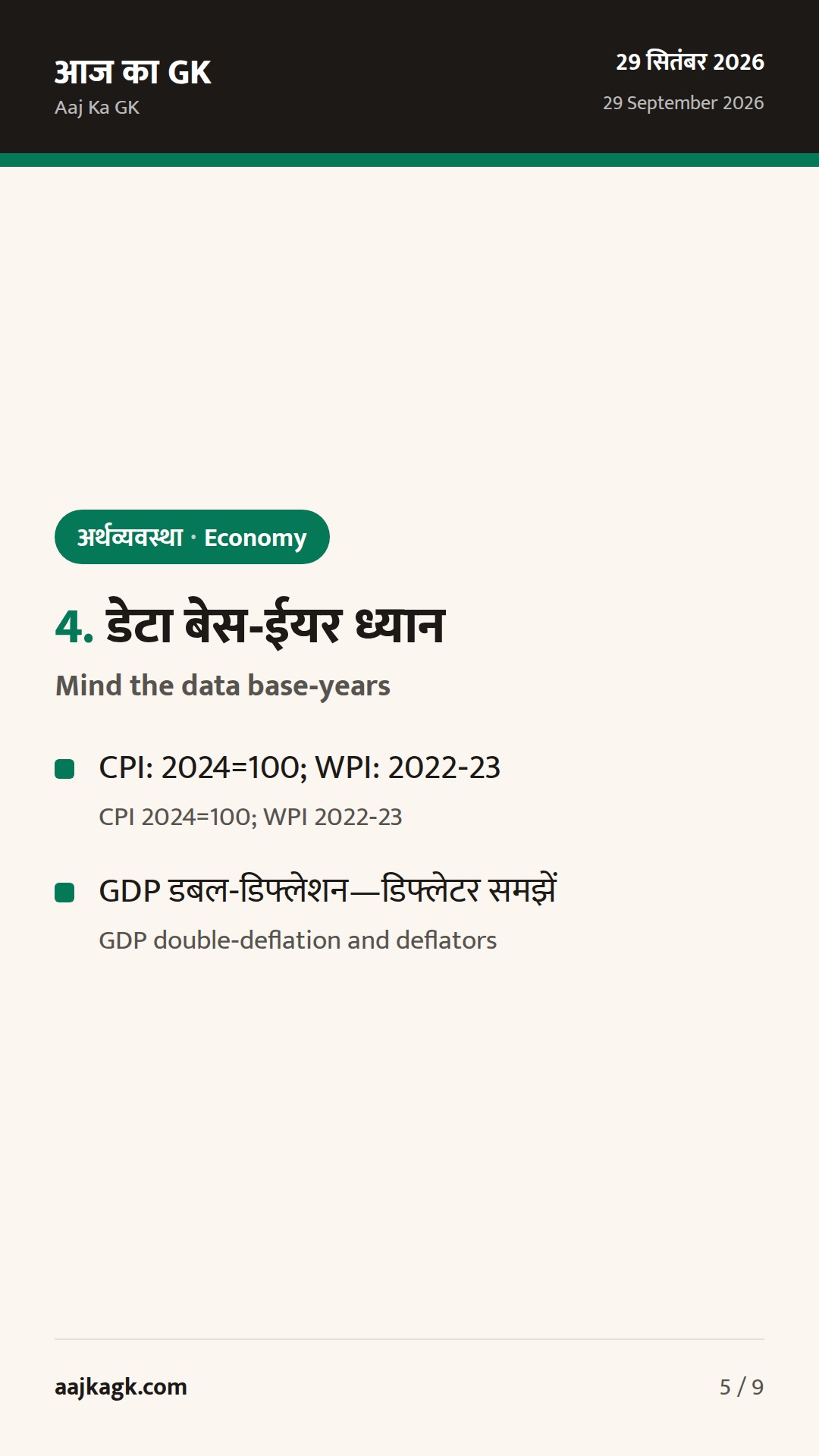
- CPI base is 2024=100; WPI base is 2022‑23—vital for reading data.
- RBI’s liquidity tools (OMO/VRRR) track these near‑term indicators closely.
1) High‑frequency indicators robust; digital payments remain buoyant
What happened
On 28 September 2026, a market update noted that India’s high‑frequency indicators (HFIs) stayed healthy with sustained momentum in digital payments (UPI/networks). Tax inflows and toll collections pointed to resilient logistics and domestic demand. Source: Business Standard.
Background
Amid inflation and global headwinds, formalisation, better tax compliance and rapidly expanding digital rails (UPI, AePS, NETC, etc.) are visibly shaping HFIs. MoSPI recently issued additional clarifications on GDP estimation—especially the use of double‑deflation and industry‑wise implicit deflators—helpful to reconcile real vs nominal gaps. Source: PIB.
Why it matters for exams
- HFIs (GST, e‑way bills, tolls, digital payments) act as a real‑time barometer for short‑term demand/supply trends.
- RBI and the Centre monitor these to calibrate liquidity/OMO‑VRRR and near‑term fiscal operations.
- Debate on double‑deflation is exam‑relevant—revise GVA vs GDP, deflators, and base‑year changes (CPI/WPI).
2) Russia remains India’s top crude supplier in September 2026
What happened
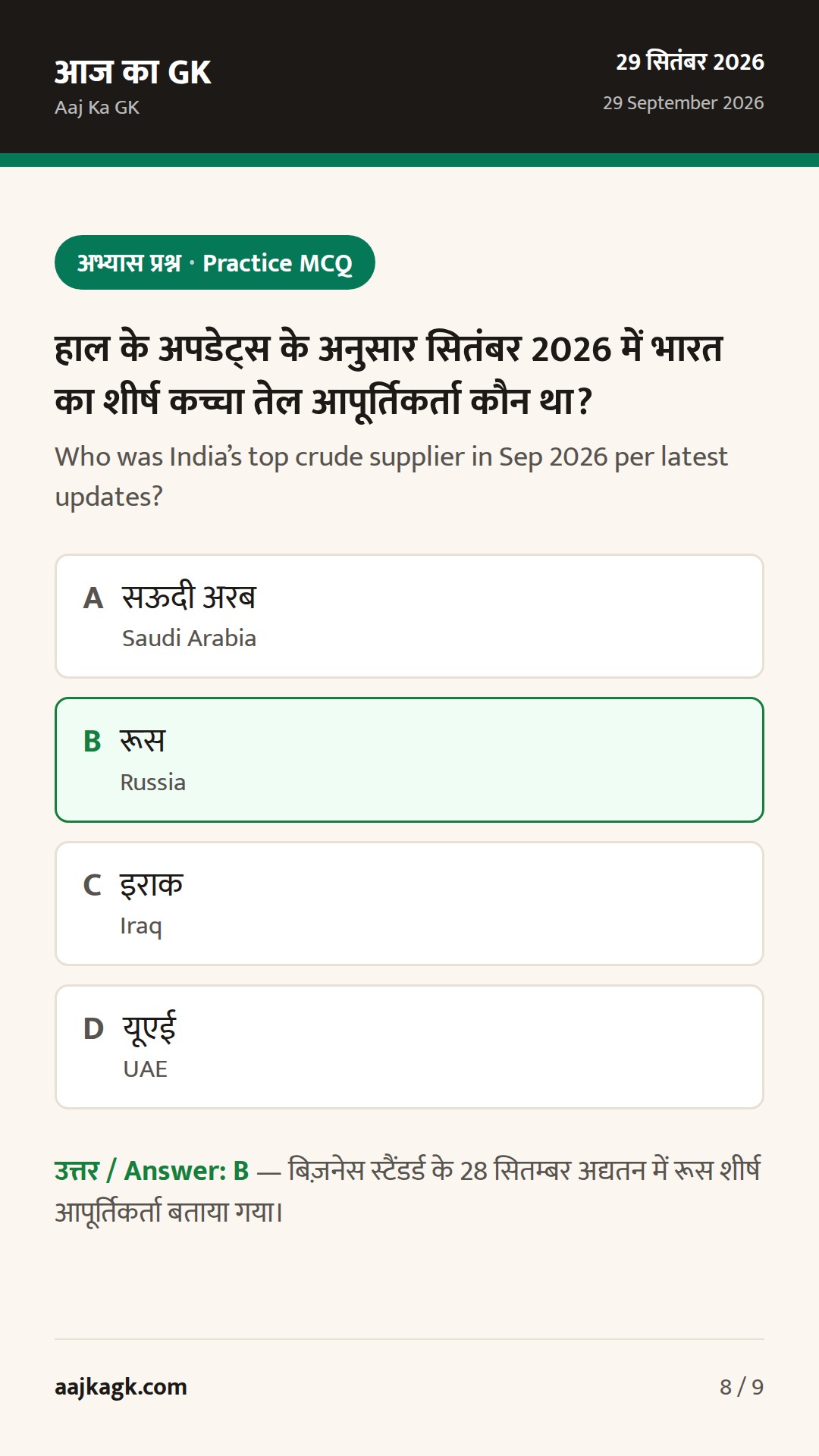
A 28 September 2026 update indicated that Russia continued as India’s largest crude supplier in September despite supply tightness—implications for the import bill, current account and the rupee are notable. Source: Business Standard.
Background
India imports about 85% of its crude needs; discounted cargoes and diversification have raised Russia’s share in recent years. Elevated crude prices can transmit to imported inflation, affect WPI/CPI, and impact fuel‑tax revenues.
Why it matters for exams
- Higher oil prices raise CAD and imported inflation, shaping RBI’s stance and rupee management.
- Energy security, the Strategic Petroleum Reserve and long‑term supply contracts are key static GK themes.
3) India–UK FTA: TRQ/import quota applications for 2026 opened
What happened
The government has opened the first round of applications for 2026 import quotas under duty concessions—notably for fully‑built passenger/commercial vehicles—under the India–UK FTA, marking the next stage of implementation via Tariff Rate Quotas (TRQs). Source: Business Standard.
Background
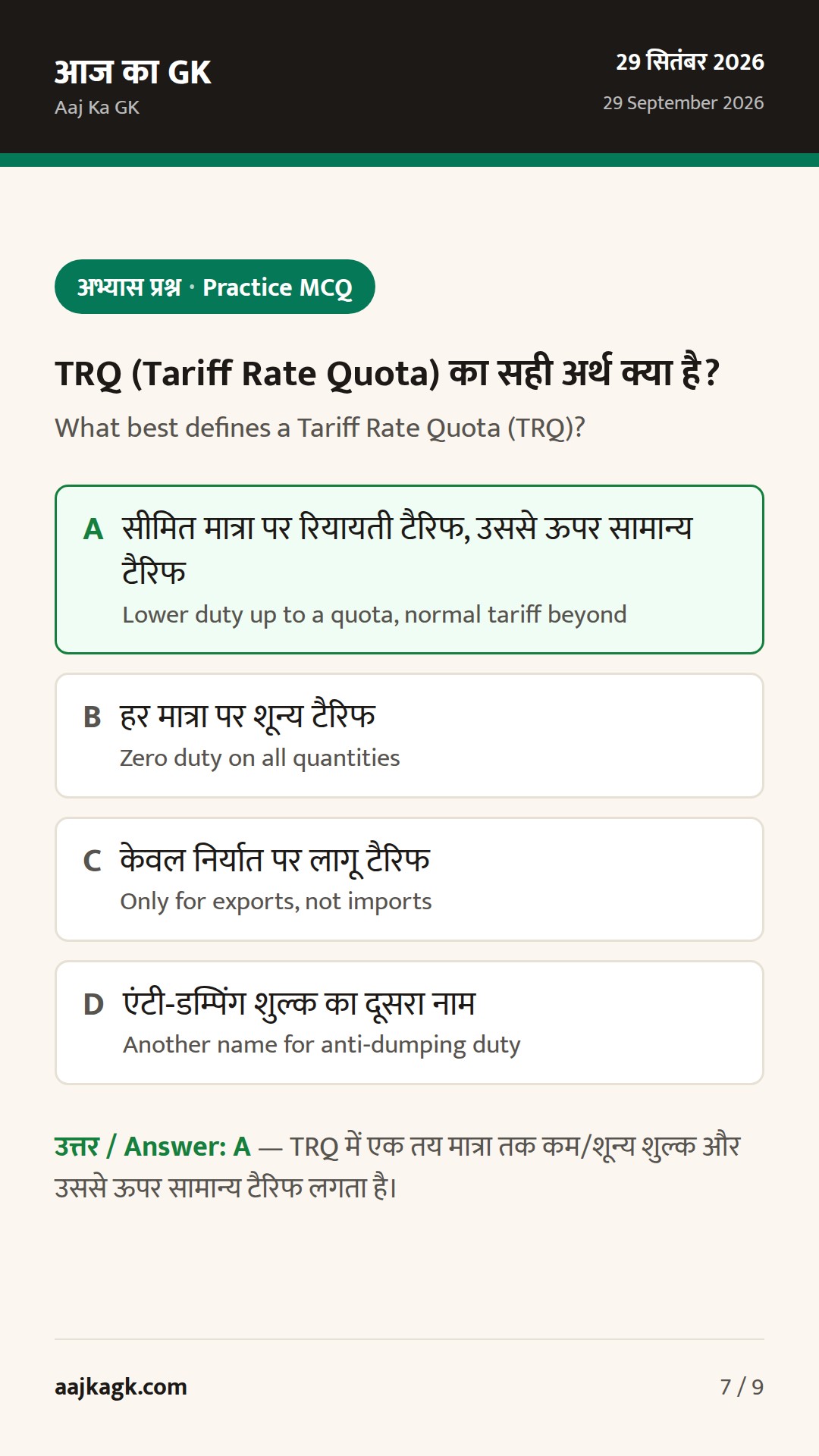
The UK–India FTA (CETA) entered into force on 15 July 2026; the UK has also recorded India’s status under DCTS. TRQs allow limited quantities at lower duty with normal tariffs beyond the quota. Sources: UK Parliament, GOV.UK.
Why it matters for exams
- Know TRQ, RoO (Rules of Origin) and sensitive lists—core FTA terminology.
- Auto‑sector implications: import competition, tech‑transfer, and localisation targets.
- Weigh consumer welfare gains vs domestic industry protection in FTA design.
Static GK/Data angle
Background facts
- CPI new base is 2024=100; official release available for Aug 2026. Source: PIB.
- WPI base is 2022‑23; Aug 2026 WPI inflation at 9.92% YoY. Source: PIB.
- RBI was established on 1 April 1935; nationalised in 1949—India’s monetary authority and banking regulator.
Quick recap
- HFIs and digital payments signal near‑term growth resilience.
- Russian crude dominance can pressure CAD, inflation and the rupee.
- TRQ operationalisation under the India–UK FTA may reshape select import flows, notably autos.
Important Facts for Exams
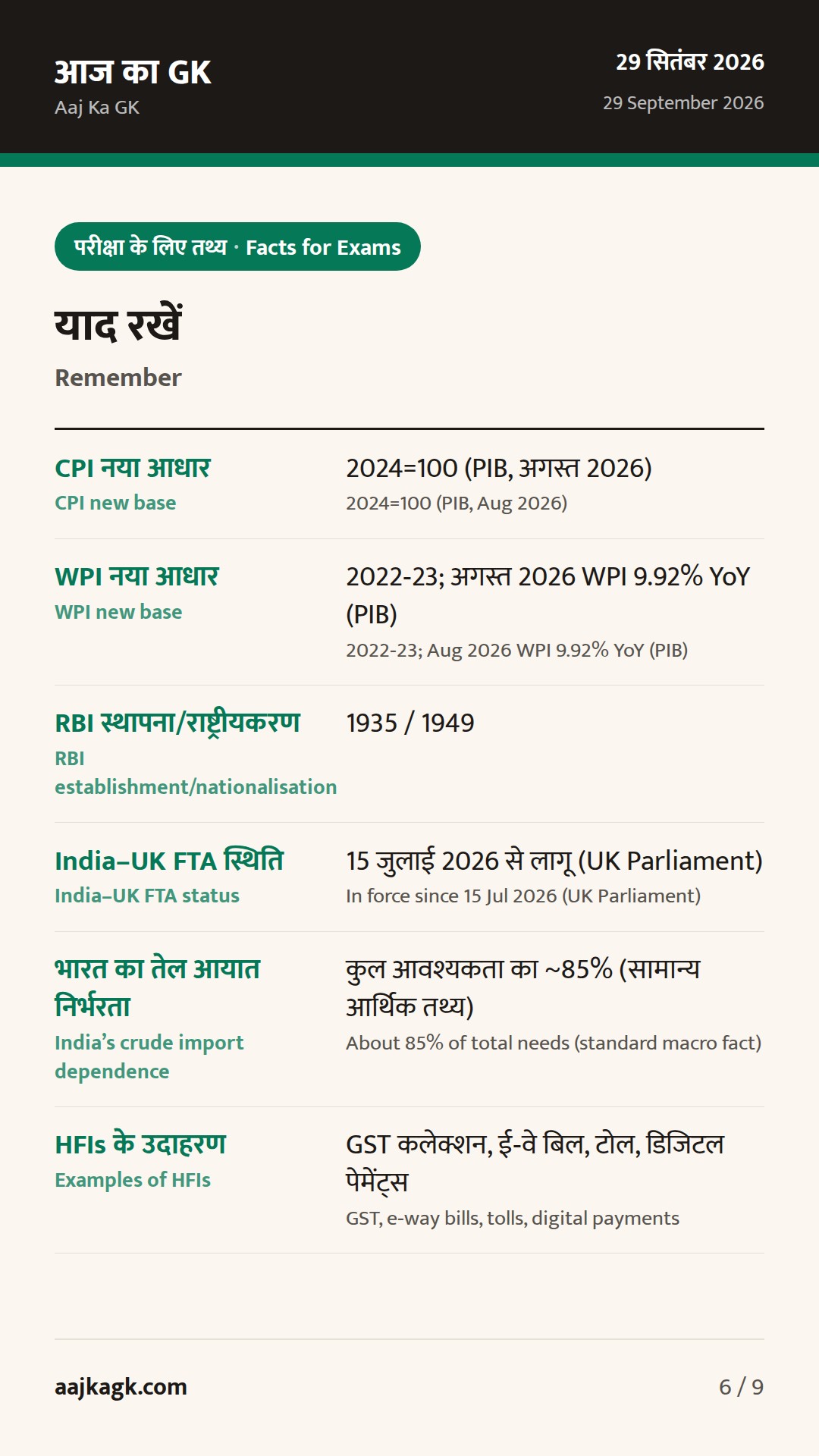
| CPI new base | 2024=100 (PIB, Aug 2026) |
|---|---|
| WPI new base | 2022‑23; Aug 2026 WPI 9.92% YoY (PIB) |
| RBI establishment/nationalisation | 1935 / 1949 |
| India–UK FTA status | In force since 15 Jul 2026 (UK Parliament) |
| India’s crude import dependence | About 85% of total needs (standard macro fact) |
| Examples of HFIs | GST, e‑way bills, tolls, digital payments |
Practice Questions (MCQ)
👆 Tap an option — you'll instantly see if it's right or wrong.
Q1 What best defines a Tariff Rate Quota (TRQ)?
Q2 Who was India’s top crude supplier in Sep 2026 per latest updates?
Q3 Which is correct about CPI’s base year in India now?
Q4 Double‑deflation is primarily relevant for estimating:
Q5 A near‑term macro effect of higher crude prices is:
Sources