SC actions, Rabi Campaign 2026 kickoff: 3 key national updates in 48 hours
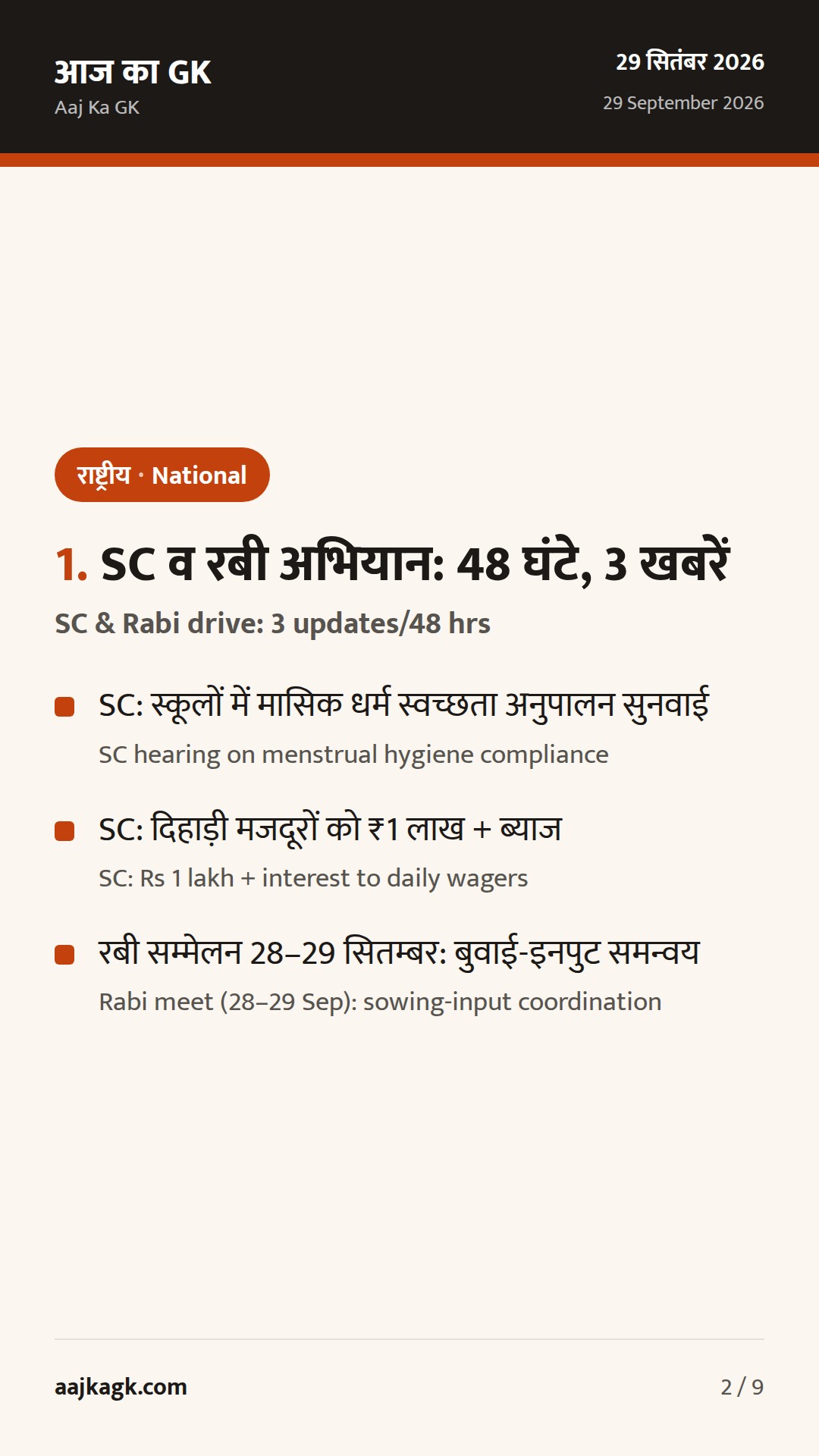
SC lists menstrual hygiene compliance case for hearing; directs Rs 1 lakh compensation to daily wagers; Agriculture Ministry holds Rabi Campaign 2026 meet.
⭐ Key Points
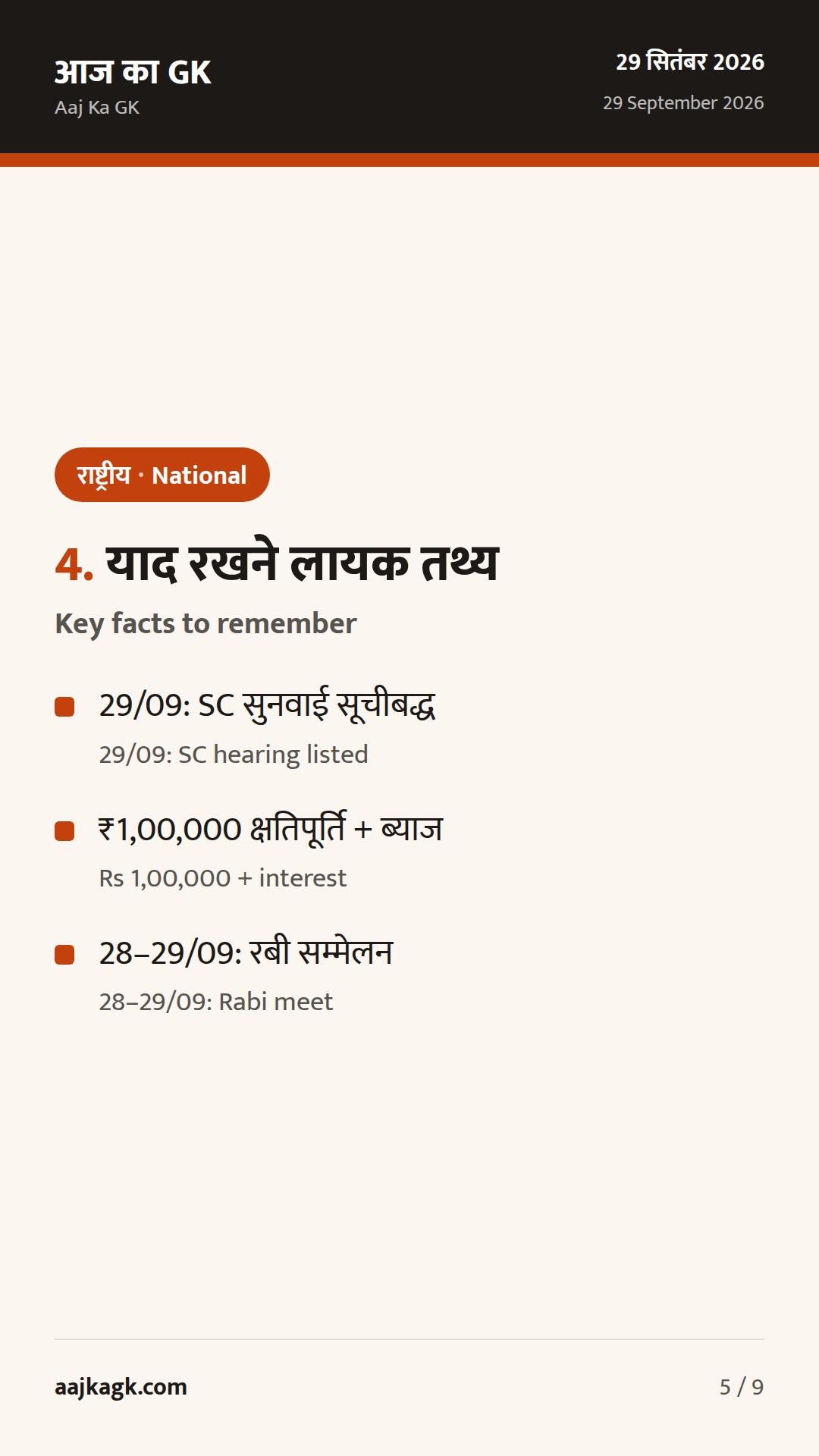
- SC listed the menstrual hygiene compliance case for today (29 Sep 2026).
- Court focus: inspections and compliance reporting by States/UTs.
- On 28 Sep 2026, SC ordered Rs 1 lakh compensation plus interest to daily wagers.
- The ruling strengthens labour rights and social security enforcement.
- National Rabi Campaign held on 28–29 Sep 2026 for sowing/input planning.
- Emphasis on seeds, fertilisers, irrigation and MSP/market linkages.
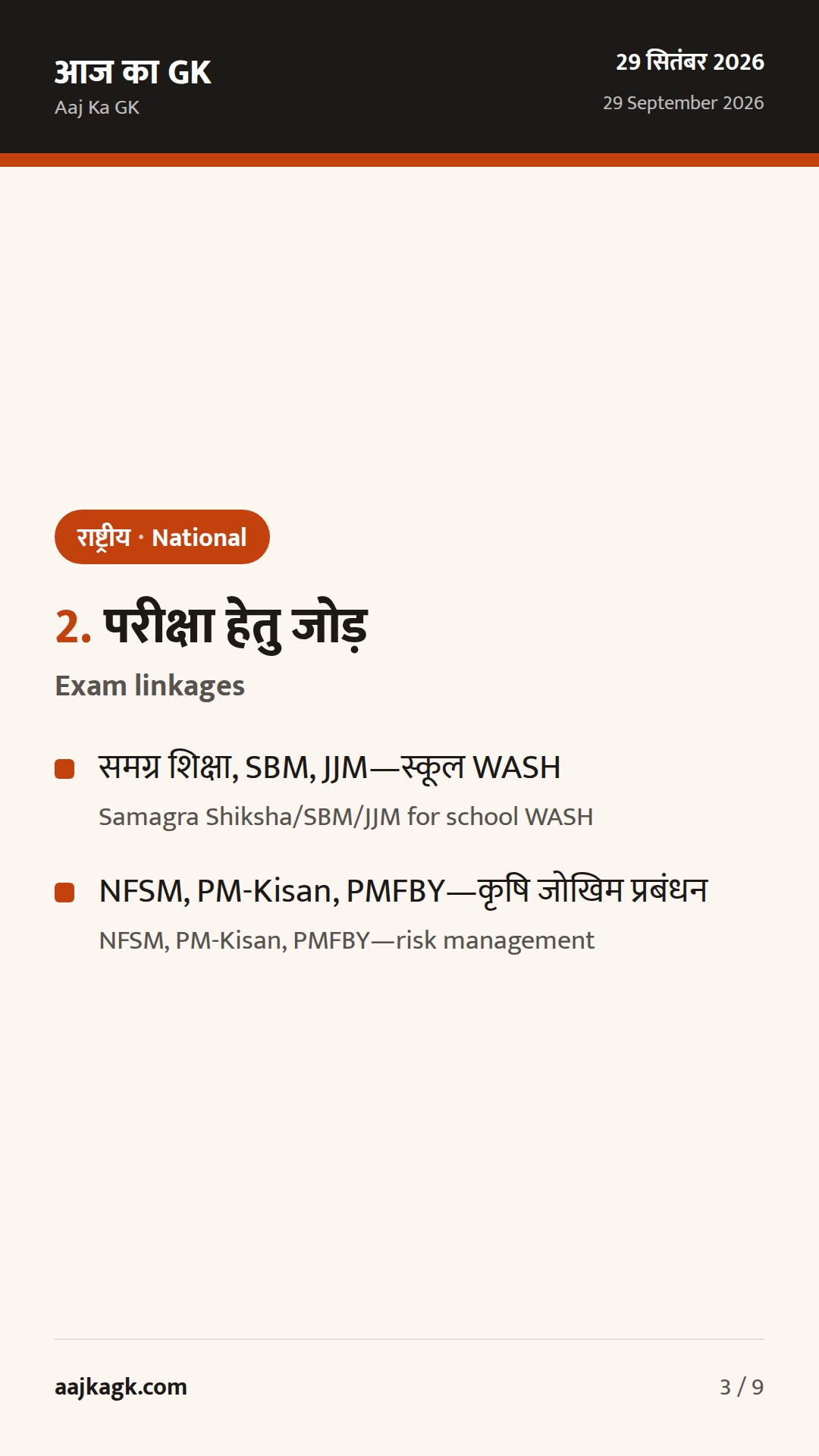
- Policy links: Samagra Shiksha, SBM, JJM; in agriculture: NFSM, PM-Kisan, PMFBY.
- Prep tip: connect SC directives with scheme design for integrated answers.
1) Supreme Court monitors menstrual hygiene compliance in schools
What happened
In Jaya Thakur vs Union of India & Ors., the Supreme Court expressed dissatisfaction over States/UTs’ compliance with its directions on menstrual hygiene facilities in schools and listed the matter for 29 September 2026. The Court has pressed for inspection-based compliance and reporting to ensure toilets, safe disposal, water and hygiene kits for girl students.
Background
Earlier directions of the Court align with policy goals under Samagra Shiksha, Jal Jeevan Mission and Swachh Bharat. The case exemplifies the judiciary’s role in enforcing social infrastructure standards in education.
Why it matters for exams
- Judicial oversight of education-health interface; recall SC’s PIL jurisdiction and enforcement tools.
- Linkage with schemes: Samagra Shiksha, JJM, SBM—objectives and implementing architecture.
- School WASH standards—separate toilets, safe disposal, potable water, hygiene education.
2) SC orders Rs 1 lakh compensation + interest to daily-wage workers for decades-old dues
What happened
On 28 September 2026, the Supreme Court directed States to pay Rs 1,00,000 compensation per affected daily-wage worker along with interest on long-pending dues. The case arose from disputes over liabilities of State-owned corporations post reorganisation, underscoring timely wage payments and compensation for delay.
Background
India’s labour law ecosystem—Minimum Wages, Payment of Wages, EPF/ESI—aims to secure timely payments and social security. The ruling reinforces constitutional guarantees of dignity and fair remuneration and strengthens deterrence against inordinate delays.
Why it matters for exams
- Constitutional hooks: Articles 21 and 23 interpreted to protect labour dignity and against forced labour-like conditions.
- Social security context: EPF/ESI basics; enforcement and compliance in PSUs.
- Court-driven implementation: contours of contempt/enforcement when executive agencies delay.
3) National Rabi Campaign 2026: States centre planning for sowing, inputs and markets
What happened
The Department of Agriculture and Farmers Welfare held the National Rabi Campaign 2026 on 28–29 September 2026. The meet synchronises State-wise targets for rabi crops (wheat, gram, mustard, barley), secures quality seed/fertiliser supply, pest management plans, irrigation/micro-irrigation readiness, and market/MSP coordination ahead of sowing.
Background
Rabi crops are sown in Oct–Nov and harvested around Mar–Apr. The campaign links with NFSM, PM-Kisan, PMFBY and micro-irrigation initiatives to raise productivity and manage risk.
Why it matters for exams
- Rabi vs Kharif—agro-climatic logic and irrigation dependence.
- MSP process—CACP’s recommendations and Cabinet approval sequence.
- Input and risk architecture—seed–fertiliser–credit–insurance integration.
Synthesis
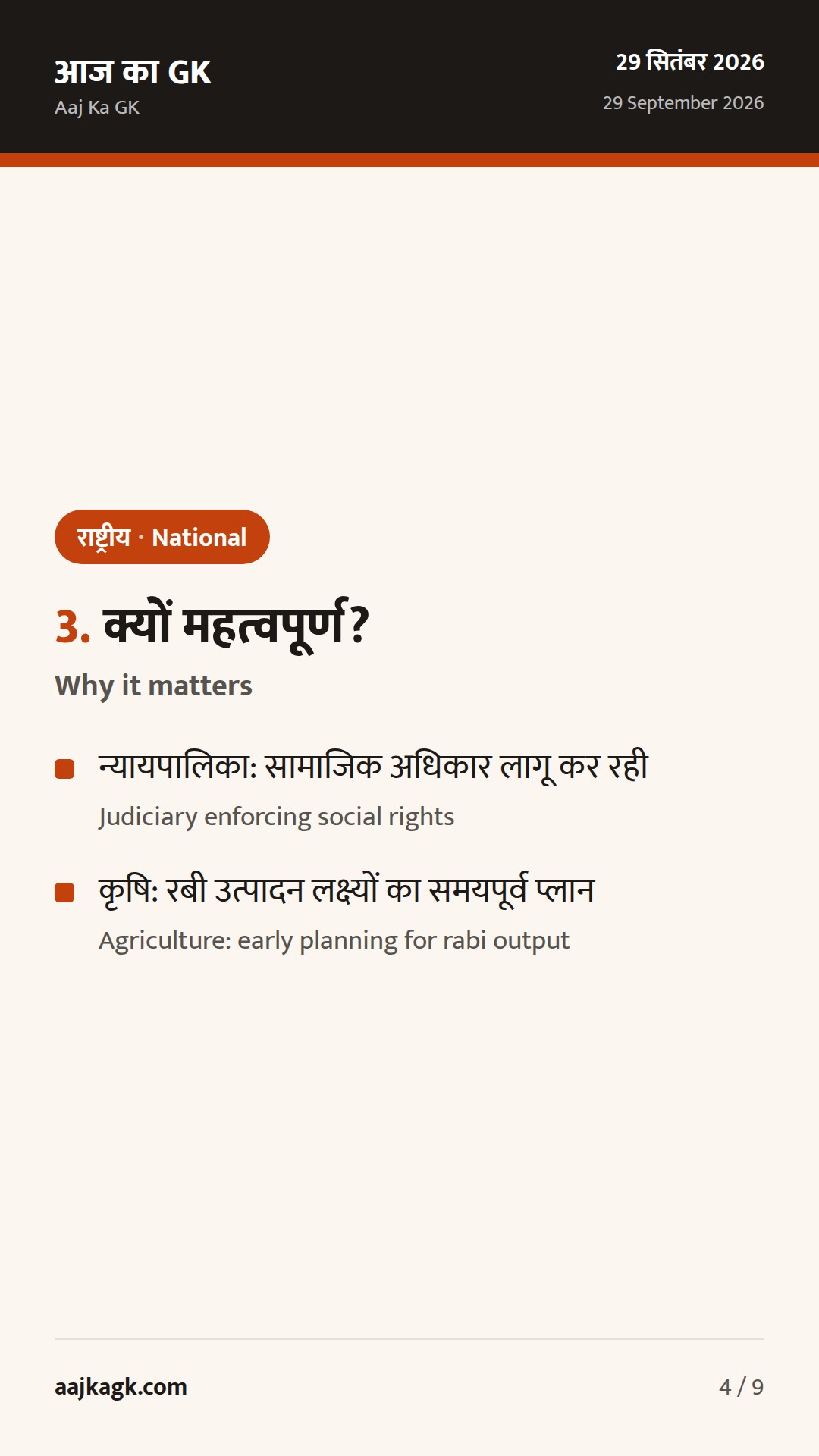
Within the last 24–48 hours, the Supreme Court’s social-justice push (school hygiene; labour dues) and the Centre’s pre-sowing coordination for rabi underline two exam-worthy currents: proactive judicial enforcement of welfare standards, and institutional planning to stabilise food output and farm incomes. Integrate scheme objectives, administrative design and SC directives for a holistic answer in Prelims and Mains.
Important Facts for Exams
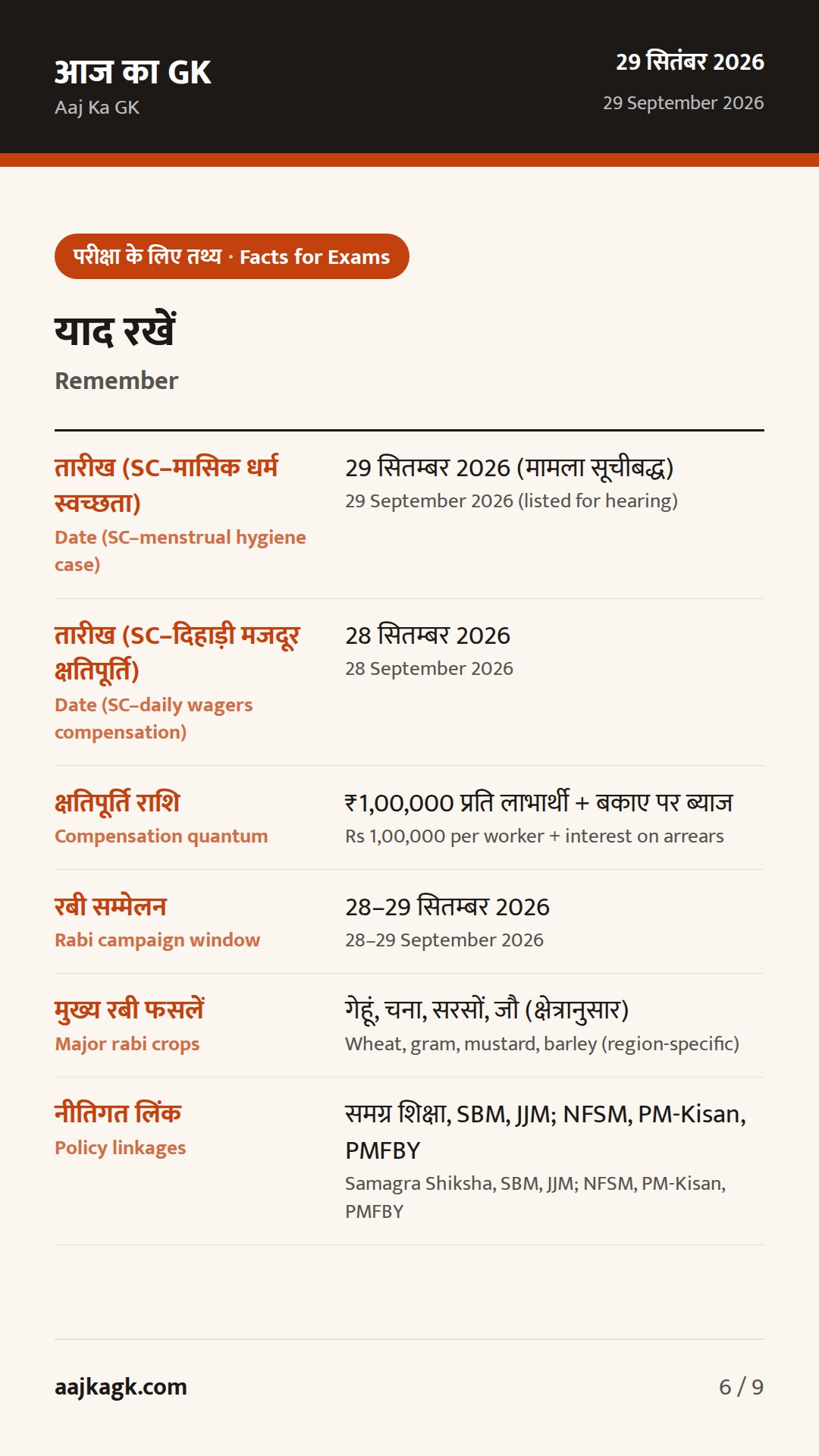
| Date (SC–menstrual hygiene case) | 29 September 2026 (listed for hearing) |
|---|---|
| Date (SC–daily wagers compensation) | 28 September 2026 |
| Compensation quantum | Rs 1,00,000 per worker + interest on arrears |
| Rabi campaign window | 28–29 September 2026 |
| Major rabi crops | Wheat, gram, mustard, barley (region-specific) |
| Policy linkages | Samagra Shiksha, SBM, JJM; NFSM, PM-Kisan, PMFBY |
Practice Questions (MCQ)
👆 Tap an option — you'll instantly see if it's right or wrong.
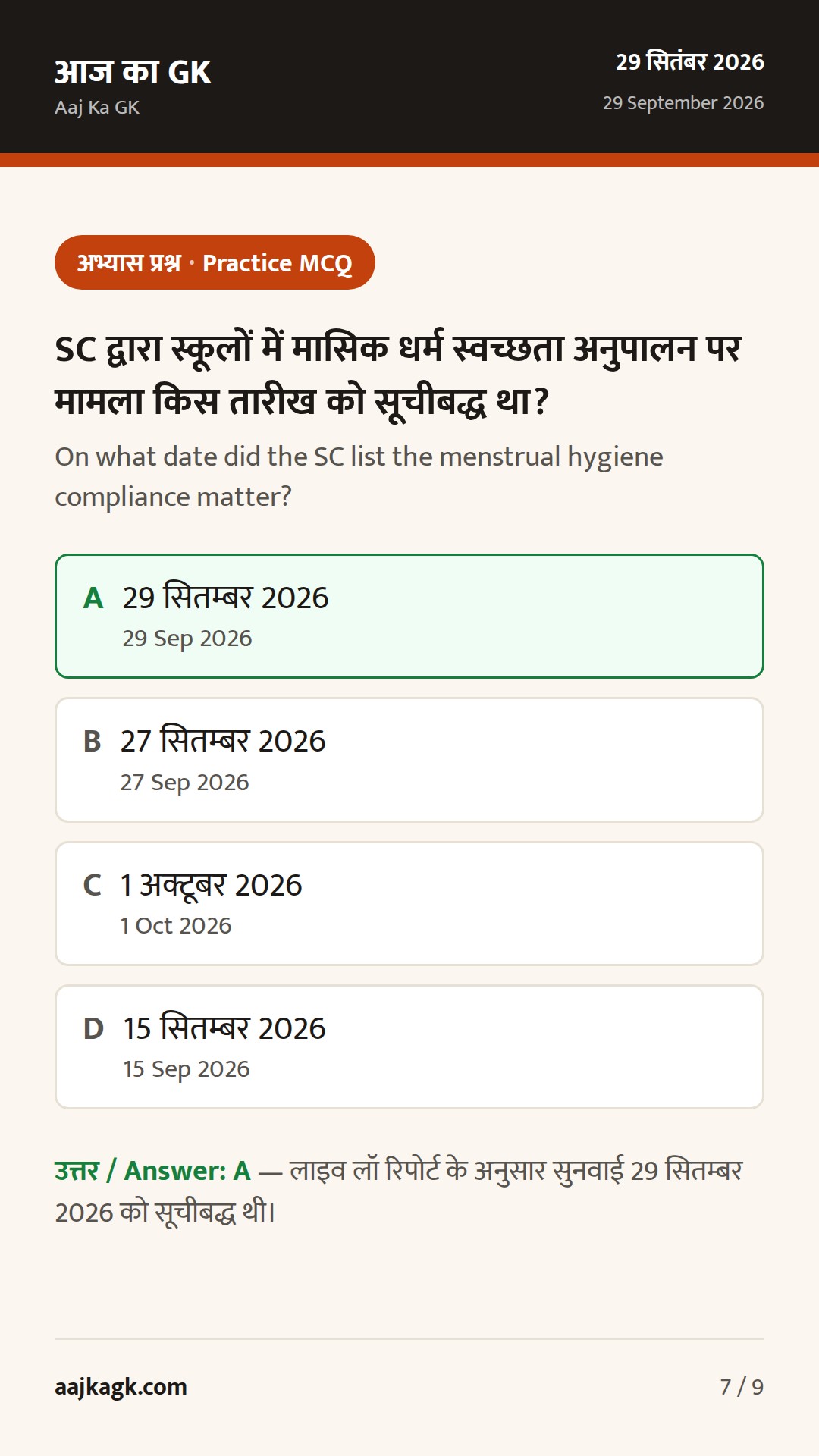
Q1 On what date did the SC list the menstrual hygiene compliance matter?
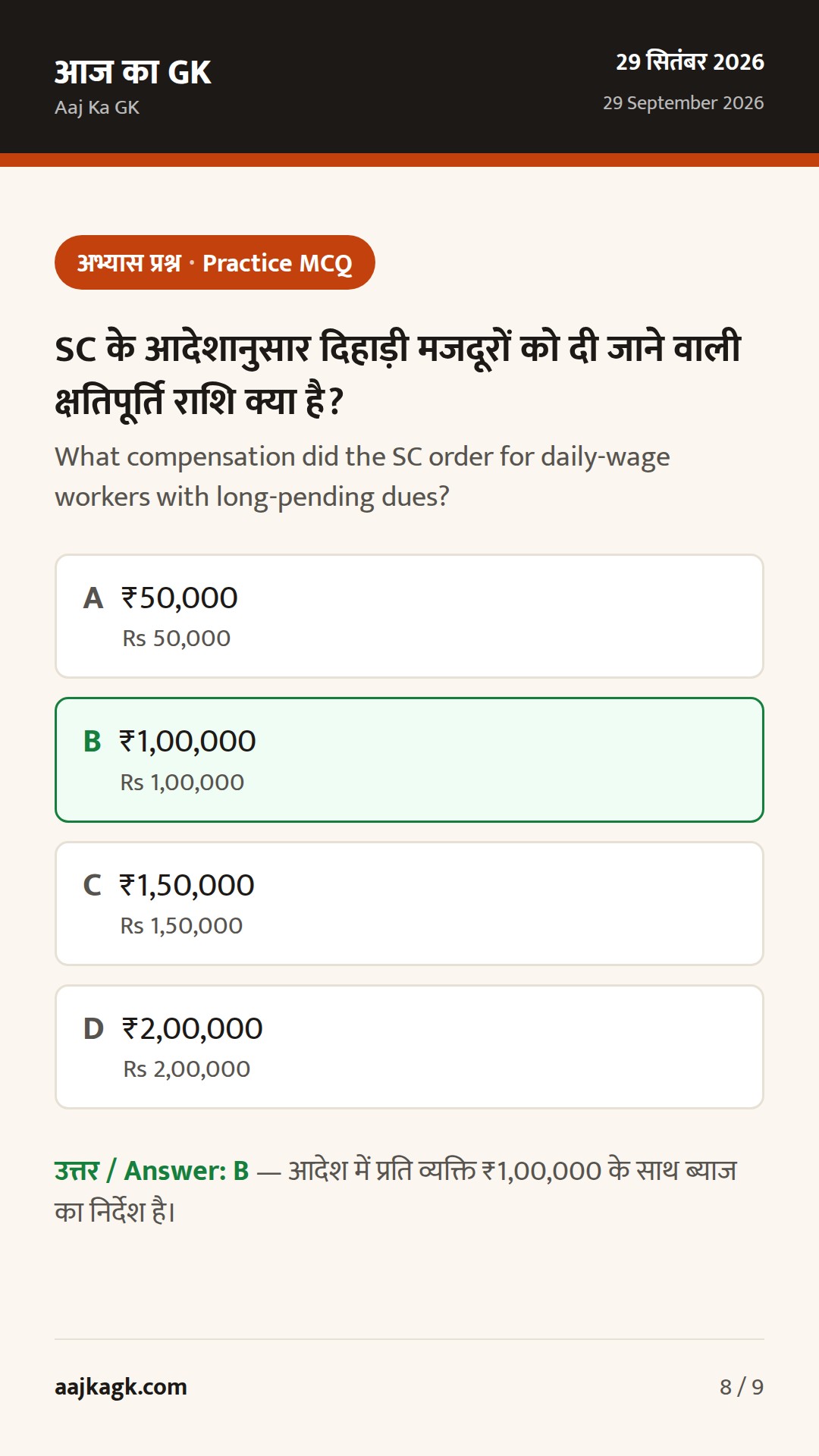
Q2 What compensation did the SC order for daily-wage workers with long-pending dues?
Q3 When was the National Rabi Campaign 2026 held?
Q4 Which is a typical rabi crop in India?
Q5 Which body recommends MSPs before Cabinet approval?
Sources